
Pediatric Growth & Support
HEALTHY STEPS FROM THE START
Growing Feet Deserve More Than a Size Check. Growing feet require the right support to develop properly and stay comfortable through every stage of childhood. Whether addressing developmental concerns, gait abnormalities, toe walking, flat feet, or footwear fit challenges, our pediatric solutions are designed with your child's growth in mind.
Children’s feet are still developing, which makes proper sizing especially important. Shoes that are too small can restrict natural growth, while shoes that are too large can create instability and increase the risk of falls or injuries.
Through personalized assessments and expert recommendations, we help support healthy movement, proper development, and confident steps for years to come.
Bring the shoes. Bring the braces. Bring your questions.
Children will cover a lot of ground; we can cover their feet!

Pediatric Growth & Support

Is the Fit Keeping Up?
Kids do not always say, "My shoes don't fit” or “My feet, back or hips hurt.” Look for what their feet and footwear are telling you.
Red Marks: Pressure areas that do not quickly fade
Crowded Toes: Toes near the front, curling or overlapping
Unstable Fit: Heel slipping, shoe twisting or device shifting
Strained Closures: Straps or laces that are difficult to secure
Movement Changes: New rubbing, reluctance, tripping or limping
Just like adults, kids spend hours on their foundation, running, walking, and jumping on their feet, every single day. Ill-fitting shoes can quickly lead to:
blisters
foot fatigue
tripping hazards
heel pain
arch discomfort
toenail irritation
poor posture and walking mechanics
Children move differently at every stage-from first steps to school, play and braces. A shoe can be long enough yet still be too narrow, too shallow or unable to hold an orthosis securely. Understanding how children’s feet evolve as they grow can help parents make informed choices about footwear and foot care, ensuring a strong foundation for a lifetime of healthy movement.
Common Pediatric Movement & Support Needs
Walking Milestones & Gait Concerns
Parents may notice delayed walking, frequent falls or changes in coordination. Developmental concerns should begin with your child's pediatrician. The Lab then helps with recommended footwear and device fit.
In-Toeing & Out-Toeing
Feet may point inward or outward for several developmental reasons. Many patterns change as children grow; persistent difficulty walking should be evaluated.
Orthoses, SMOs, AFOS & Braces
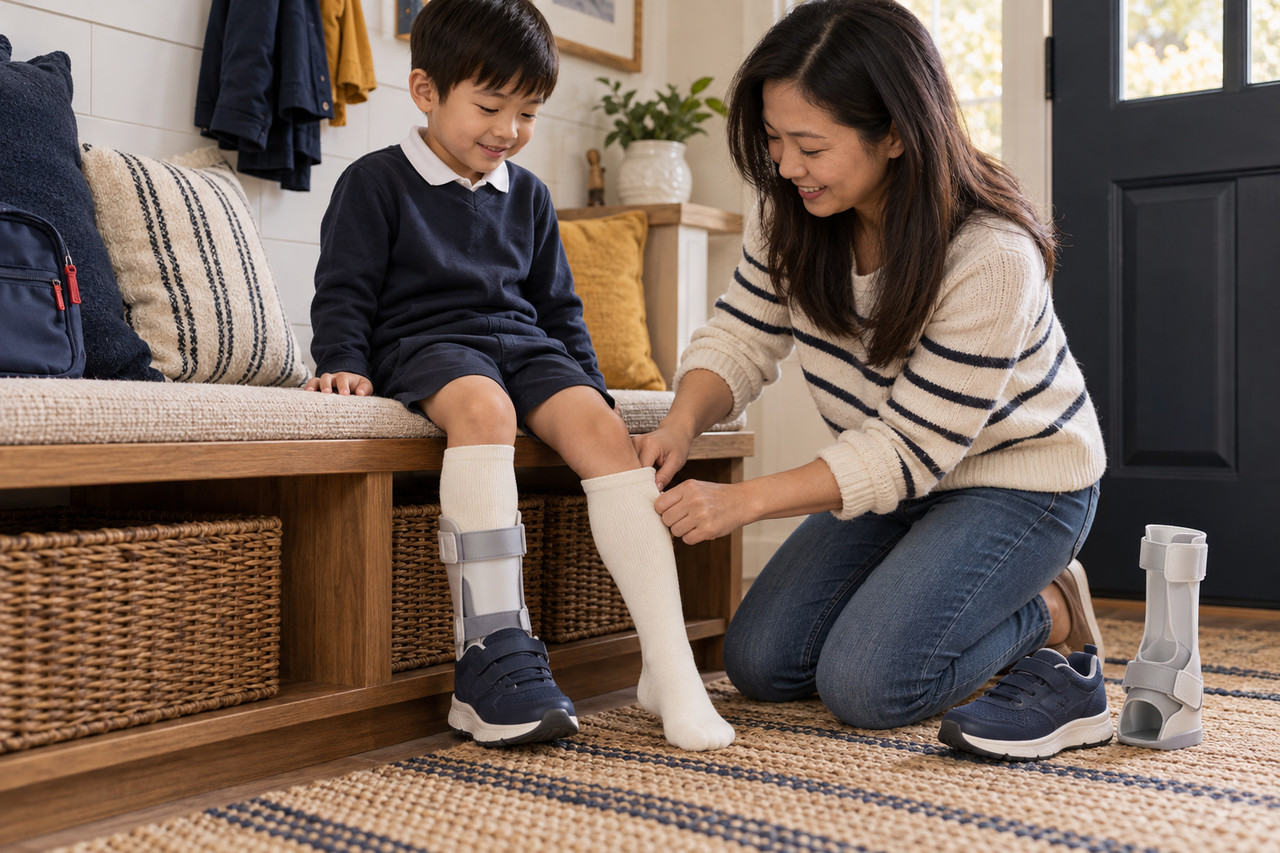
When a device is recommended, the shoe and sock must accommodate it without crowding, slipping, bunching or creating pressure. This is our specialty.
Flat or Flexible Feet
Flat feet are common in young children and often change with growth. Pain, stiffness. pressure areas or activity limits are reasons to involve your child's healthcare provider.
Toe Walking
Toe walking can occur while children are learning. When it continues after age 2 or affects comfort or function, ask your child's pediatrician for an evaluation.
WHY TRUST THE LAB
Retails stores often lack stylish, functional shoes to accommodate orthoses, braces, and other lower extremity footwear needs.
Online sizing charts can only go so far.
Every child’s foot shape is different, and sizing varies between brands and styles.
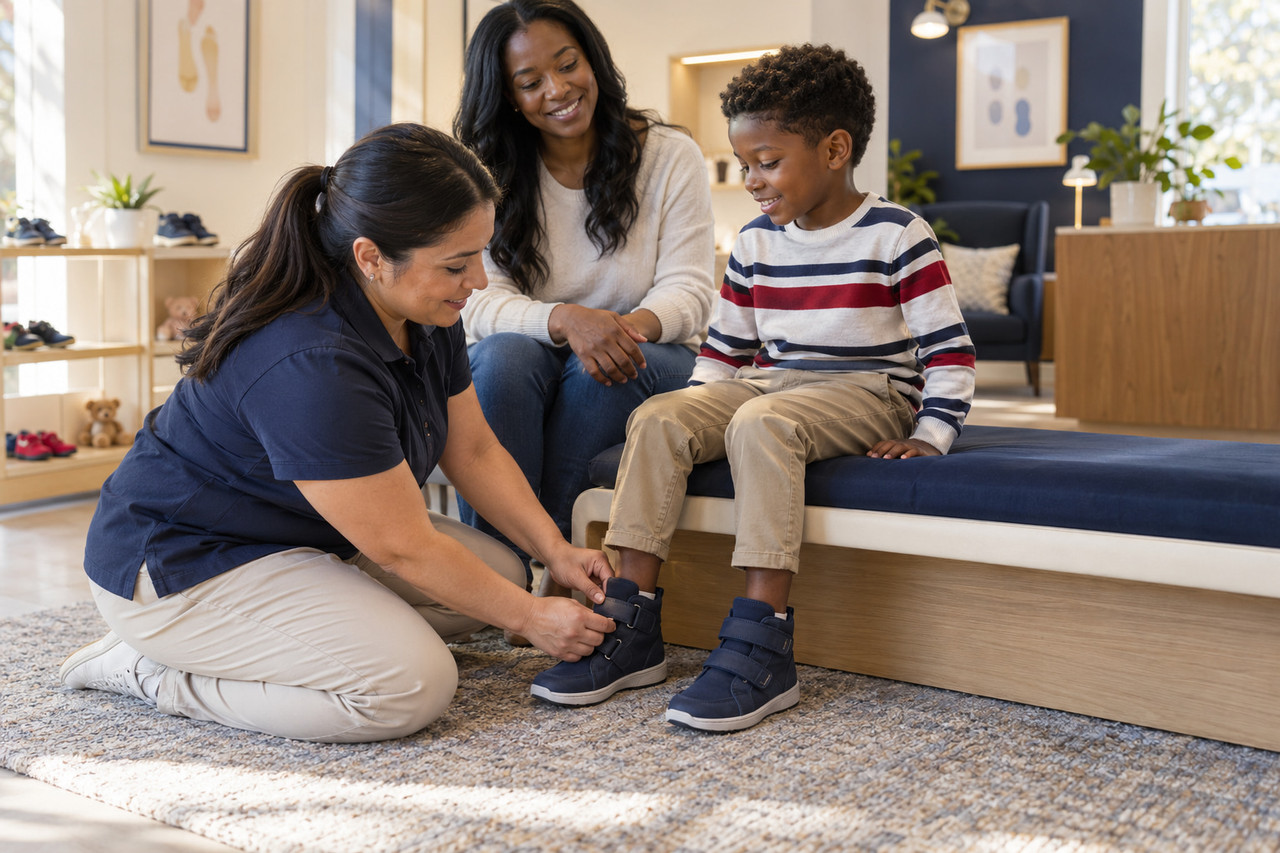
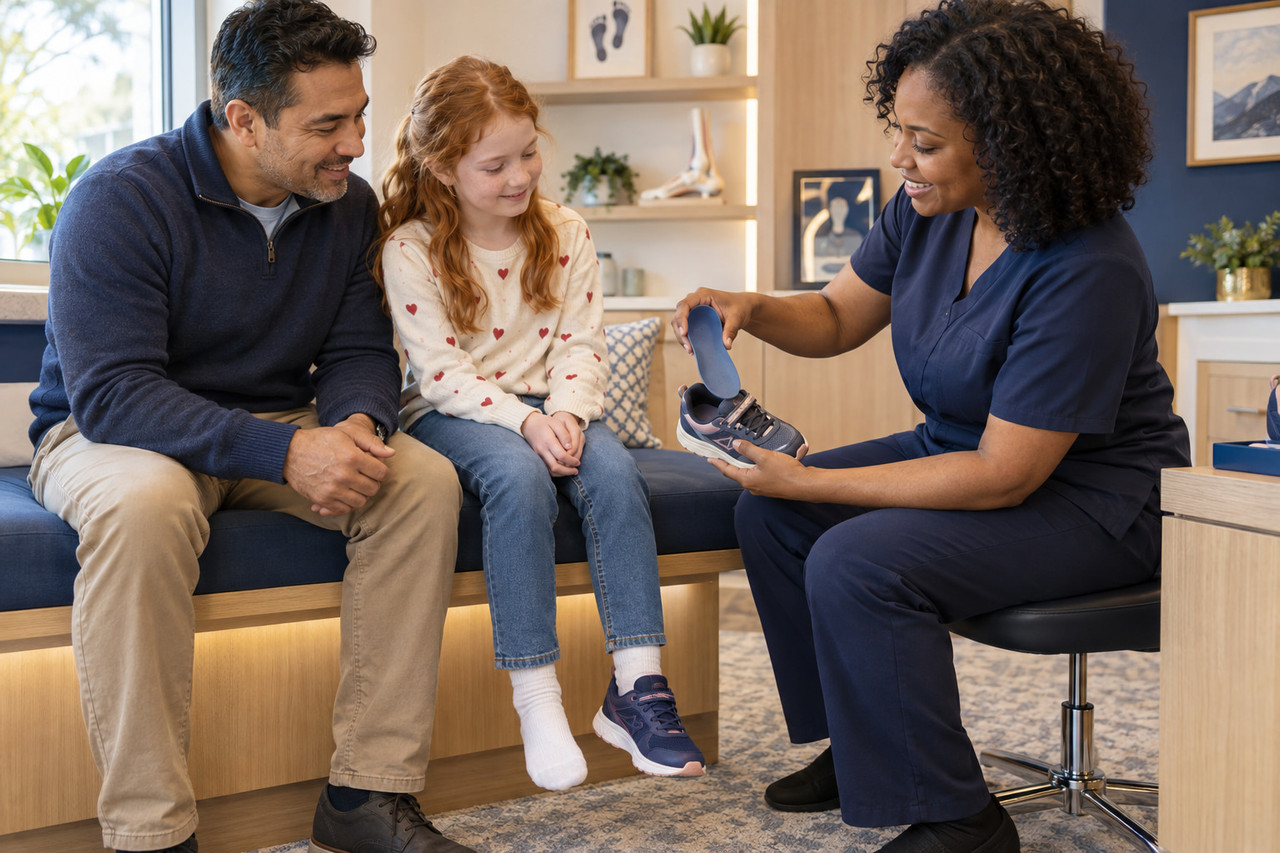
At The Lab, we check both feet, footwear, device compatibility and activities-then explain what fits now, what may need to change and when to recheck. Shoe size is just a number; your perfect fit is our specialty.
 tap for info
 tap for info
 tap for info
Important Care Note
Carter Foot Lab supports pediatric footwear, foot orthotics, and brace compatibility. We do not diagnose developmental or neuromuscular conditions. Contact your child's pediatrician about missed milestones, lost skills, pain, stiffness, sores or pressure areas, persistent toe walking after age 2, a new limp or difficulty walking.